
Cervical cancer, or cancer of the cervix (the lower part of uterus), used to be one of the leading causes of death for women in the United States. The good news: rates of cervical cancer have decreased by half since the 1970s. The not-great news: rates have slightly increased in the past decade for women ages 30 to 44. What’s more, racial disparities still exist – with Black and Indigenous women dying at a 65% greater rate than white women.
Fortunately, there are simple ways to reduce your risk of and even prevent cervical cancer. With a little information and some help from your doctor, you can take steps to keep you healthy in the years ahead.
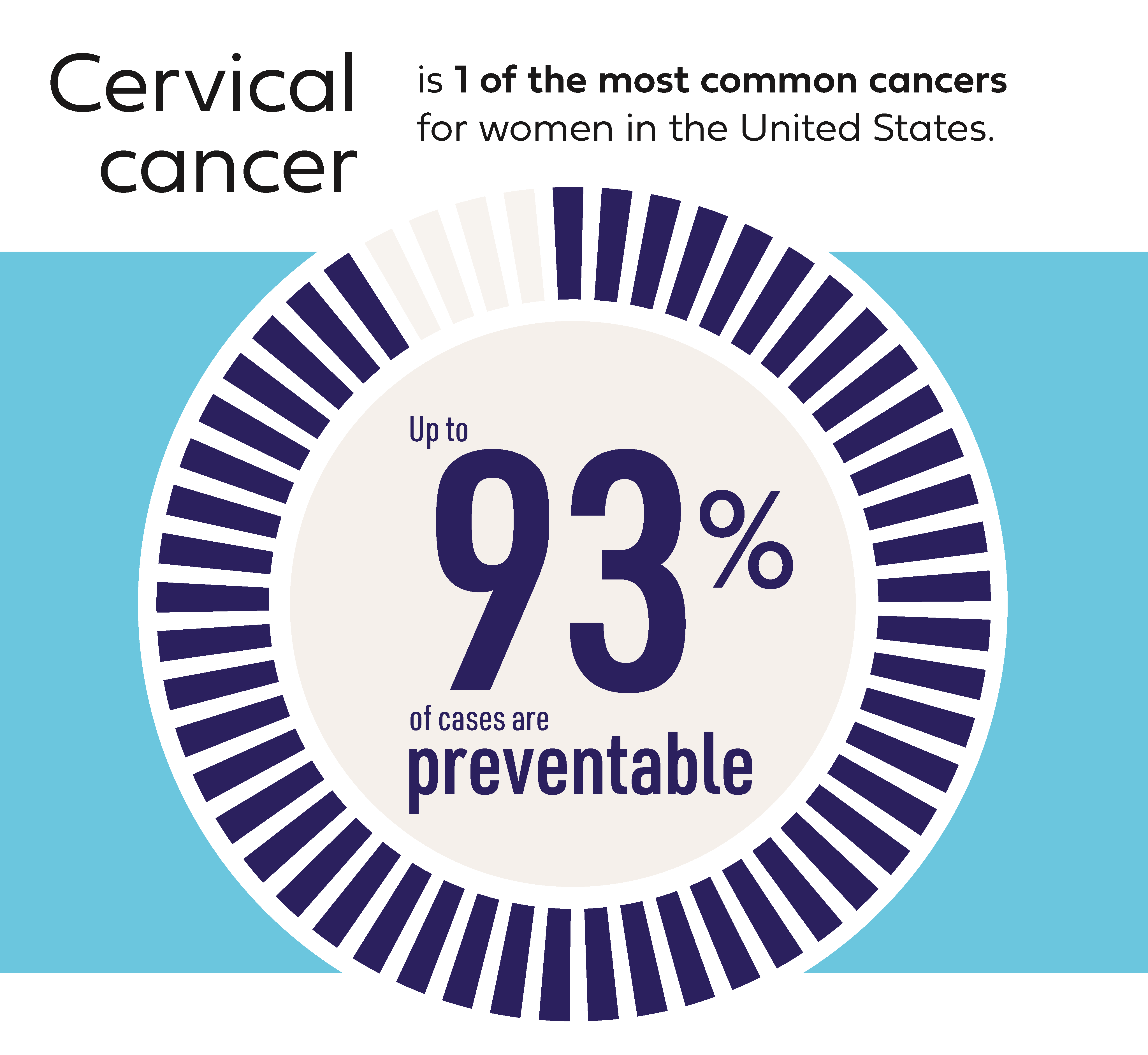
Cervical cancer is one of the most common cancers for women in the U.S. Up to 93% of cases are preventable
1. Get the HPV vaccine
Most cervical cancers are caused by the human papillomavirus (HPV). The HPV vaccine is a highly effective way to prevent infection. A two-dose series is recommended for girls ages 9 to 14 and three-dose series for ages 15 to 26.
Women over the age of 26 may not benefit from the vaccine. It’s most effective before exposure to HPV. However, a doctor can best assess whether someone is still a candidate for the shot.
2. Make healthy lifestyle choices
While a healthy diet and exercise are linked with lower cancer risk, there are a few lifestyle choices associated with reducing cervical cancer risk.
- Quitting tobacco – tobacco use, including exposure to secondhand smoke, is linked with cervical cancer.
- Using a condom – condoms can help stop the spread of HPV.
3. Get screened
There are two main tests to screen for cervical cancer: a Pap test and an HPV test. Depending on your age and previous screening results, most women of average risk should get screened every three to five years.
- Ages 21 to 29 – get a Pap test every three years, provided results are normal.
- Ages 30 to 65 – get a Pap test every three years or HPV test every five years, provided results are normal.
- Ages 65 or older – you may no longer need to be screened, though you should always follow your doctor’s guidance.
4. Get treated immediately
If any screenings come back abnormal or precancerous cells are present, talk to your doctor and schedule any follow-up tests they recommend. If cervical cancer is detected locally – meaning it has not spread in the body – there is a 91% chance of surviving five or more years.
Even if you’ve had normal screenings in the past, it’s good to take note of cervical cancer symptoms. If symptoms are present, contact your doctor. These include:
- Abnormal bleeding or discharge
- Pain during intercourse
- Pelvic pain
- Swelling of the legs
- Blood in urine
Not sure if you’re due for a cervical cancer screening? Reach out to your doctor or check your health reminders through your Blue Shield of California online account.
Blue Shield of California is not a healthcare provider and does not provide medical advice. This is for informational purposes only. Consult with your physician or other qualified healthcare provider with any questions.


